
Many couples find themselves trapped in a repetitive cycle of conflict, wondering why the person they love most seems to trigger their deepest frustrations. You may notice that the harder you try to explain your needs, the more misunderstood and isolated you feel. This recurring tension is often not a sign of a failed union, but rather a reflection of ingrained relationship patterns. Imago relationship therapy provides a structured, evidence-based pathway to move from reactive, destructive behavior toward a state of profound, conscious connection. By mastering specific communication skills and the dialogue process, couples can transform their frustrations into opportunities for healing. In this guide, we will explore how this couples therapy model facilitates conflict resolution, improves marital satisfaction, and supports your overall mental health by turning the "power struggle" into a journey of shared growth.
Understanding the "Imago": Why We Choose the Partners We Do
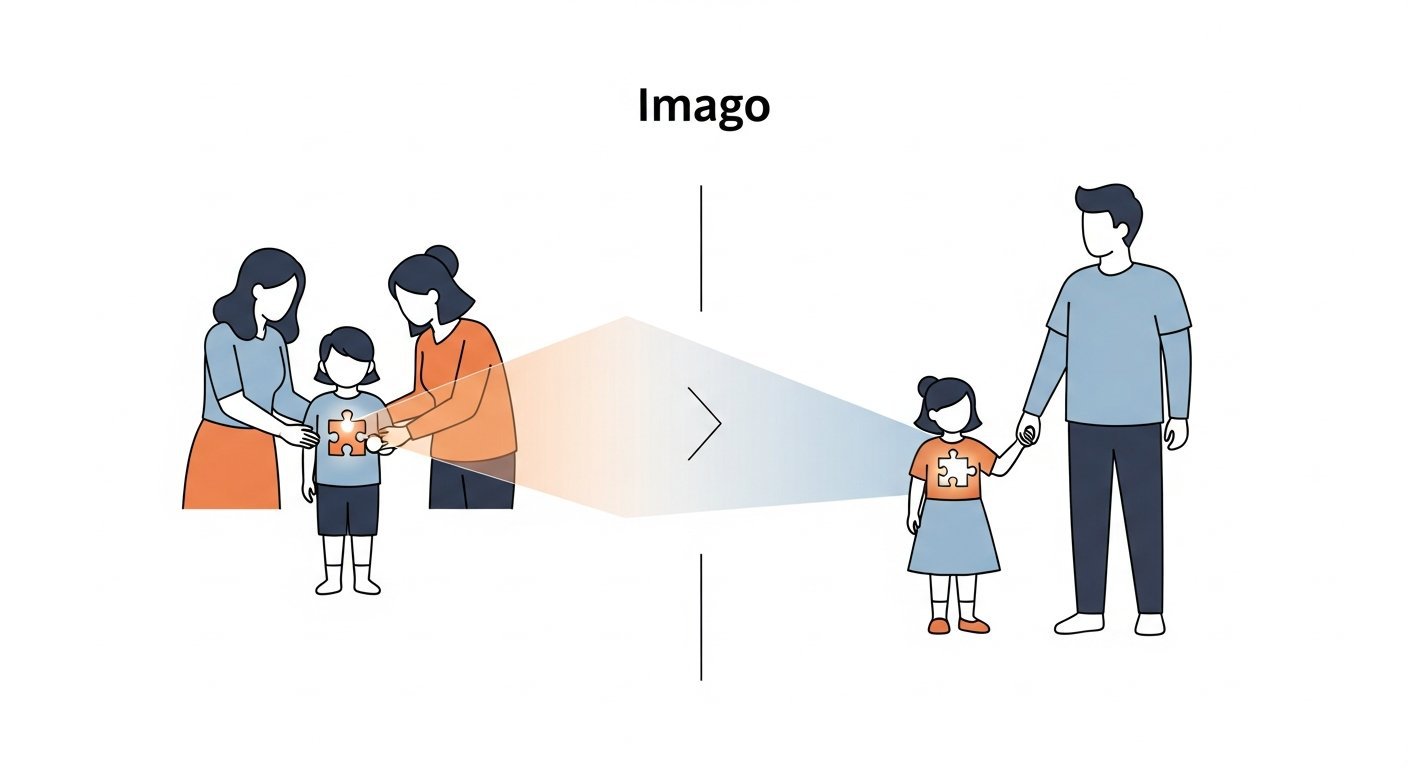
At the core of this approach is the concept that we are not randomly attracted to our partners. Instead, we are drawn to them by an unconscious image—a template formed in our youth—that dictates our choice of romantic companions.
The Latin Root and the "Inner Image" of Love
The term "Imago" comes from the Latin word for "image." Within the framework of imago therapy, it refers to the subconscious mental imprint we hold of the individuals who cared for us during our formative years. This internal blueprint acts as a magnet, influencing our selection of romantic partners. We are often unconsciously seeking someone who embodies both the nurturing and the frustrating traits of our primary caregivers, creating a template for what we define as "love."
How Childhood Experiences Shape Adult Attraction
Our Childhood Experiences leave deep imprints on our psyche. If we experienced certain needs being met—or consistently ignored—we internalize those dynamics as the standard for intimacy. When we meet a partner who mirrors these early relationships, we feel an inexplicable sense of familiarity. This magnetic pull is the psyche’s attempt to recreate the conditions of childhood, hoping that this time, with this partner, we can finally achieve the resolution and love we lacked in the past.
The Unconscious Search for Healing and Completion
We do not choose partners merely to be "happy"; we often choose them to be healed. Imago theory posits that we gravitate toward partners who can help us finish the emotional work of childhood. We look for someone who has the capacity to soothe our childhood wounds, even if that person also possesses the very traits that originally caused those wounds. This unconscious search for completion is the driving force behind most long-term partnerships.
Harville Hendrix, Helen LaKelly Hunt, and the Evolution of Imago
Developed in the 1980s by Harville Hendrix and Helen LaKelly, the model gained widespread recognition following their appearance on The Oprah Winfrey Show. Their groundbreaking book, Getting the Love You Want, shifted the focus from analyzing past trauma to creating a present-day container for safety and growth, eventually leading to the formation of Imago Relationships International.
From Romantic Love to the Power Struggle: Where Most Couples Get Stuck
Almost every relationship begins with a phase of romantic intensity. However, as the infatuation fades, the "power struggle" inevitably sets in. This is the stage where our differences emerge and our partners begin to trigger our unresolved hurts. While most couples interpret this struggle as a signal that the relationship is "wrong," Imago therapy reframes this as the most important threshold of growth.
The Shift Toward a "Conscious Relationship"
Moving into a conscious relationship requires a radical shift in perspective. Instead of viewing your partner as an adversary who needs to change, you begin to see them as a partner in your healing. By consciously choosing to move away from defensiveness and toward understanding, couples can transcend the power struggle and build a secure, lasting attachment.
The Imago Dialogue: The Heart of the Process
The Imago Dialogue is the fundamental, structured tool of this therapy. While it may feel mechanical at first, this rigidity is intentional. It provides a Safe Environment that prevents the fight-or-flight nervous system from taking over during difficult conversations.
Step 1: Mirroring (Active Listening Without Judgment)
Mirroring requires you to repeat back what your partner has said. You are not meant to interpret, agree, or argue; you are simply reflecting their words until they feel fully heard. This step strips away the filters of our own assumptions and forces us to pay attention to our partner’s reality.
Step 2: Validation (Finding the Logic in Your Partner’s Perspective)
Once the message is mirrored, you move to validation. This does not mean you agree with the facts; it means you recognize the internal logic of their experience. When you say, "It makes sense to me that you would feel this way given your experience," you acknowledge their reality, which is the most powerful antidote to defensiveness.
Step 3: Empathy (Connecting with the Underlying Emotion)
Empathy is the deepest stage of the dialogue. Here, you attempt to identify and express the feelings your partner is experiencing. By saying, "I imagine you feel sad, scared, or abandoned," you bridge the emotional gap between you. This builds a profound sense of connection that no amount of debating can replicate.
Troubleshooting: Why the Dialogue Feels "Mechanical" at First
Many couples resist the dialogue because it feels stiff or artificial. However, like any skill, the structure must be followed precisely before it can become fluid. The mechanical nature is a necessary safety feature; it slows down the interaction enough to bypass the reactive brain and engage the compassionate, thinking brain.
The Role of the Therapist as a Coach and Facilitator
In therapy sessions, the clinician acts as a coach rather than a judge. Their primary goal is to facilitate the dialogue between you and your partner, interrupting reactive patterns and ensuring that both partners feel protected.
Creating a Safe Environment for Vulnerability
Safety is the cornerstone of the session. The therapist ensures that no one is attacked or shamed. By maintaining this secure environment, they allow couples to lower their guard and express needs that have been suppressed for years.
Structured Exercises: Beyond Just "Talking About Your Week"
Sessions are highly structured. You will engage in exercises designed to illuminate specific patterns, such as "appreciation" exercises or structured inquiries into each other’s childhoods to identify the origins of current triggers.
Identifying the "Childhood Wound" Behind the Current Trigger
The therapist helps you connect a present-day annoyance to a past event. When a partner’s tone triggers a disproportionate rage, the therapist helps you pause and identify the specific childhood situation that makes that tone feel so dangerous. Once the origin is identified, the trigger loses its power.
Behavior Change Requests: Asking for What You Need
Instead of criticizing, Imago encourages the "Behavior Change Request." You learn to articulate a specific, positive action your partner can take to make you feel safer or more loved. This transforms a complaint into a concrete invitation for partnership.
The "Deepening" Process: Moving from Surface Issues to Core Needs
Most arguments occur on the surface—money, chores, or scheduling. The "deepening" process pulls the conversation toward the core needs, asking, "What does this fight really represent about our need for connection or security?"
Re-romanticizing the Relationship Through Positive Flooding
Couples in the power struggle often forget why they liked each other. Positive flooding involves daily acts of appreciation and affection. This intentional focus on the good helps reset the nervous system and creates a reservoir of goodwill.
Building a Shared Vision for the Future
When couples stop fighting the past, they gain the energy to build a future. The therapist guides you in creating a "Shared Vision"—a set of agreements about how you want your life together to look, ensuring that both partners feel aligned in their goals.
Comparing Modalities: Imago vs. The Gottman Method vs. EFT
While the Gottman Method focuses on data and friendship and Emotionally Focused Therapy (EFT) prioritizes the attachment bond, Imago is distinct in its emphasis on the "childhood template." Imago is often the best fit for couples who feel stuck in a cycle of re-enacting old hurts and want an actionable way to move past those triggers.
Who Benefits Most from This Structured Approach?
Couples who are tired of circular arguments and are willing to invest in a disciplined, step-by-step process typically see the best results. If you are prone to emotional volatility, the rigid structure provides the exact containment you need to stabilize the relationship.
Assessing Your Readiness for Emotional Work and Vulnerability
Imago therapy requires a high degree of transparency. If you or your partner are not yet willing to be vulnerable or to take ownership of your part in the conflict, the process may feel challenging. However, for those prepared to dive into their own internal world, the rewards are transformative.
Establishing "Safe Conversations" in Daily Life
The true power of Imago is not in the therapy room; it is in your home. By making the "safe conversation" your standard way of communicating—whether you are discussing finances or daily plans—you normalize vulnerability. Over time, these dialogues become second nature, replacing the chaos of the power struggle with a reliable, loving rhythm.
Conclusion
Imago Relationship Therapy offers more than just conflict resolution; it offers a roadmap for relational evolution. By recognizing that our partners are not our enemies, but rather mirrors that reflect our past, we can stop the cycle of blame and begin the work of healing. The journey from the romantic honeymoon phase through the difficult power struggle is not a sign of failure, but a necessary passage toward a conscious, mature relationship.
The structure provided by the Imago Dialogue acts as the vital framework for this growth. While the process may feel rigid initially, it is exactly that discipline that creates the safety required for true intimacy to flourish. As you learn to replace criticism with curiosity and defensiveness with empathy, you will find that the triggers that once caused distance now serve as bridges to a deeper, more profound connection. If you are ready to move past repetitive conflict and build a lasting, conscious partnership, you can apply to work with Melina Linden who runs a private practice in Athens, Greece, and online.
